The basics of error-free construction: When to use a vibrating soil roller?
When building a house, driveway or parking lot, a lot of attention is paid to the concrete, asphalt or final surface. Paradoxically, however, the result is often determined by something that is not even visible after completion – the subgrade. It is the quality of soil compaction that is the difference between a structure that will last for years and one that will start to crack after the first winter.
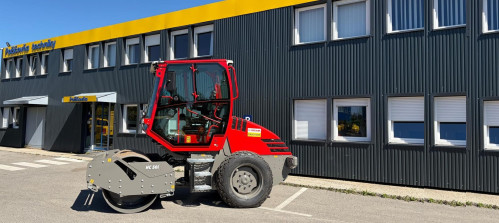
The vibratory soil roller is not a technique “just for big companies.” On the contrary, it is increasingly becoming a sensible choice for smaller contractors and private builders who do not want to risk expensive repairs in the future.
Risks of poor-quality subsoil: Problems that come later
If the substrate is not sufficiently compacted, it will become apparent sooner or later. Most often not immediately, but after months or years, when repairs are already complicated and expensive.
Typical consequences include:
● settlement of the building or floor slabs,
● cracking of foundations, concrete or asphalt,
● the emergence of unevenness on driveways and parking lots,
● reduced bearing capacity of the substrate under higher loads.
All these problems have a common denominator – underestimated soil compaction. And this is where the vibrating soil roller has a clear place.
How to choose the right compaction machine: plate, earth or tandem roller?
In practice, when compacting a base, a decision is often made between three solutions – a vibrating plate, a vibrating soil roller and a tandem roller. Each of them has its place and purpose, but they differ significantly in their scope of use.
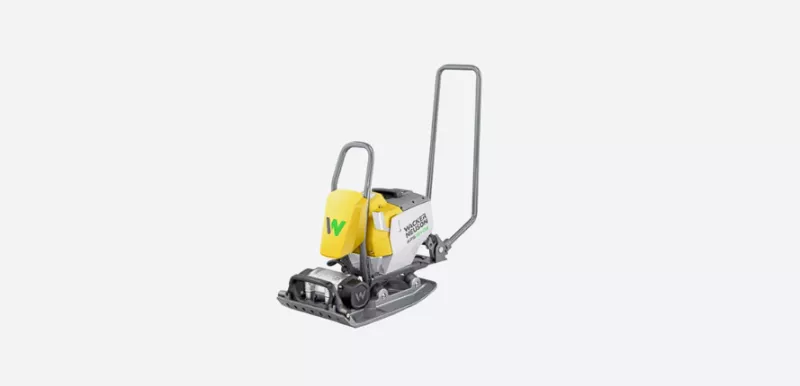
A vibrating plate is ideal for smaller areas, sidewalks, patios or work around the house. It is fast, compact and easy to handle, but for larger areas or rougher embankments it has its limits - it simply cannot compact deep enough and evenly.
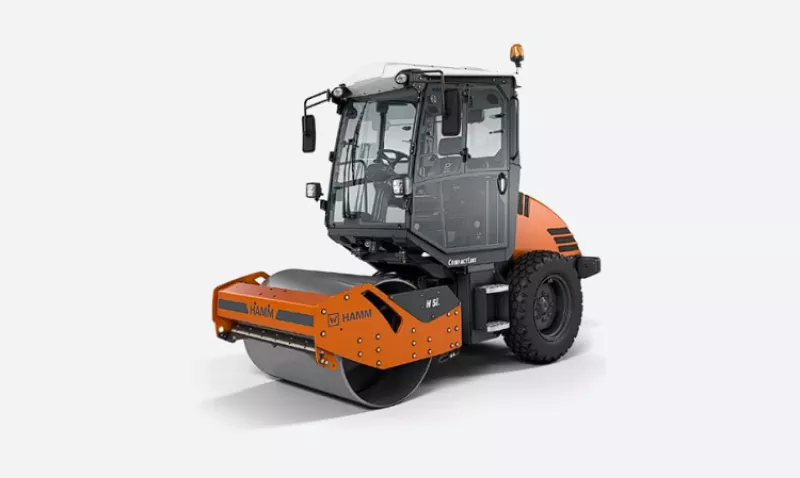
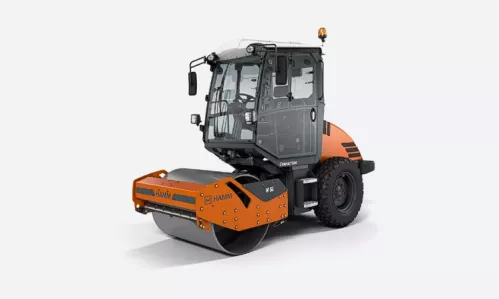
The vibratory soil roller is a logical step up. It combines significantly higher compaction capacity with good maneuverability and is designed exactly where a vibrating plate is no longer sufficient, but large road machinery would be unnecessarily oversized. It is most often used for compacting substrates for foundations, parking lots, driveways or industrial areas.
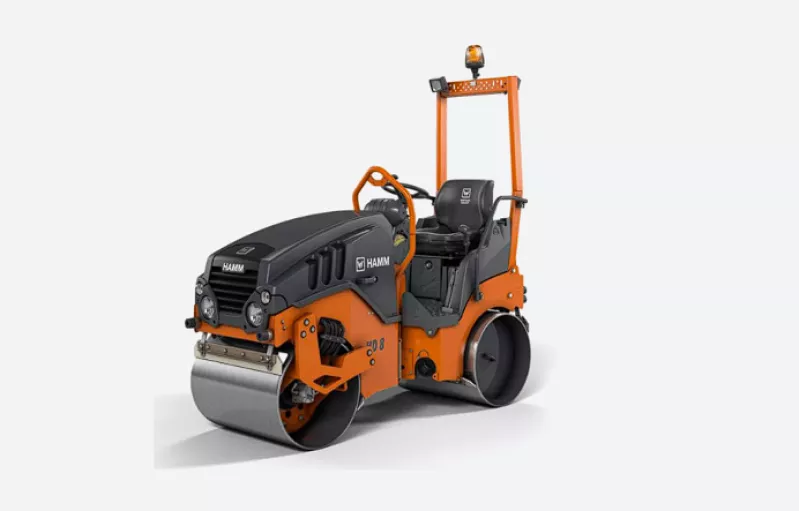
At the other end of the spectrum is the tandem roller, which is designed specifically for final layers of asphalt or large paved areas. It is ideal for large projects, but for smaller construction sites it can be unnecessarily robust and less flexible in confined spaces.
The vibratory soil roller fills the gap between the vibrating plate and the tandem roller – offering high compaction efficiency, while remaining a practical solution for common small and medium-scale construction projects.
Where you will use a vibrating soil roller in practice
The use of this type of cylinder is much wider than it seems at first glance. You will most often find it in:
● compaction of embankments and base layers in front of building foundations,
● preparing the base for parking lots and driveways,
● compacting layers before concreting or asphalting,
● projects in the vicinity of industrial and warehouse halls,
● reconstruction of older paved surfaces where load-bearing capacity needs to be restored.
Wherever a vibrating plate is no longer enough and a large road roller is an unnecessary luxury, a vibrating soil roller has its justification.
Static vs. Vibratory Rolling: What's the Difference?
There are two basic principles when compacting a substrate – static and vibratory rolling.
● Static rolling uses only the weight of the machine. It is suitable for fine finishing or surface leveling. Ideal for clay soils, finishing asphalt surfaces or where vibration is not appropriate.
● Vibratory compaction combines the weight of the machine with vibration, allowing it to compact deeper layers and achieve higher material densities. It is ideal for loose materials such as gravel, sand, and for compacting thicker asphalt layers.
For the base of foundations, concrete slabs or asphalt, vibratory rolling is significantly more effective - the soil settles better, air in the pores is eliminated and the bearing capacity of the entire layer increases. Compared to static rollers, up to 20 to 30% better compaction results are achieved, which is often key for technical decision-making.
Rental with support: When the equipment arrives at the construction site
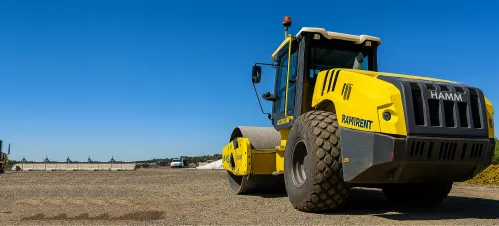
One of the great advantages of renting from Ramirente is not only the machine itself , but also the facilities, service and transport . The vibratory soil roller will give you:
● brought directly to the construction site,
● technically checked and ready for immediate use,
● supported by professional advice on selection and use.
You don't have to deal with storage, maintenance or service - you can use the technology exactly when you need it.
Conclusion: A solid foundation cannot be repaired – it must be done right
If you are preparing the base before concreting or asphalting and want to be sure that you will never have to go back to it, the right decision is to choose a vibrating soil roller from the Ramirent offer.